
Custom apparel
Custom t-shirts, done right.
Premium blanks, four print methods, and a real proof before anything runs. Custom t-shirts printed and shipped from Los Angeles, one piece or a thousand.
100% cotton, blends and performance
Named blanks, weight and fit up front
A real proof before anything runs
In stock in Los Angeles
Full disclosure
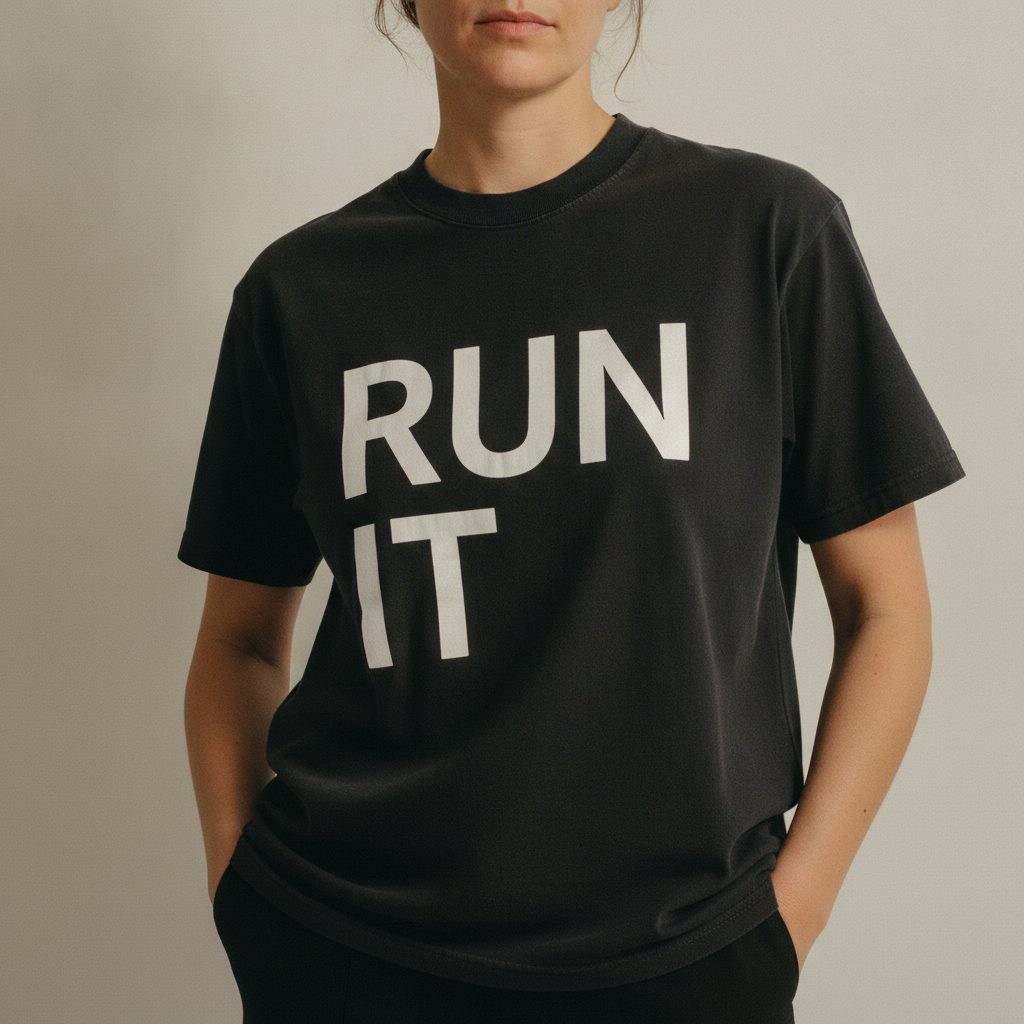
Material lab
Start with a blank you’d wear anyway
Named weights and fiber splits, because “premium heavyweight” is not a specification.
Ringspun cotton tee
Smooth face · 100% cotton
The default blank. Holds the finest halftone we can pull, and water-based ink soaks straight into it.
Heavyweight tee
Dense knit · 100% cotton
Opaque enough that white barely needs an underbase. High-density and puff stand up well on it.
Cotton-poly blend tee
Soft hand · 50/50 cotton-poly
Takes DTF and water-based ink cleanly. On darks, plastisol wants a low-cure ink or a blocker under the white.
Performance tee
Stretch knit · 100% polyester
Dye migration is the risk here. Stretch and silicone inks move with the fabric and hold their color.
Reading the spec
GSM is weight, not quality. A 180 tee with a good ringspun yarn will out-print a cheap 220 every time, because the smoother face holds a finer halftone.
Fiber split matters more for decoration. Anything above about 30% polyester needs a blocker or a low-cure ink or the dye will bleed into your white.
Not sure? Send the style number and we will tell you.
Decoration zones
Where the print goes.
We do not restrict placement. These are the zones that carry a design furthest, and the sizes that actually fit them.
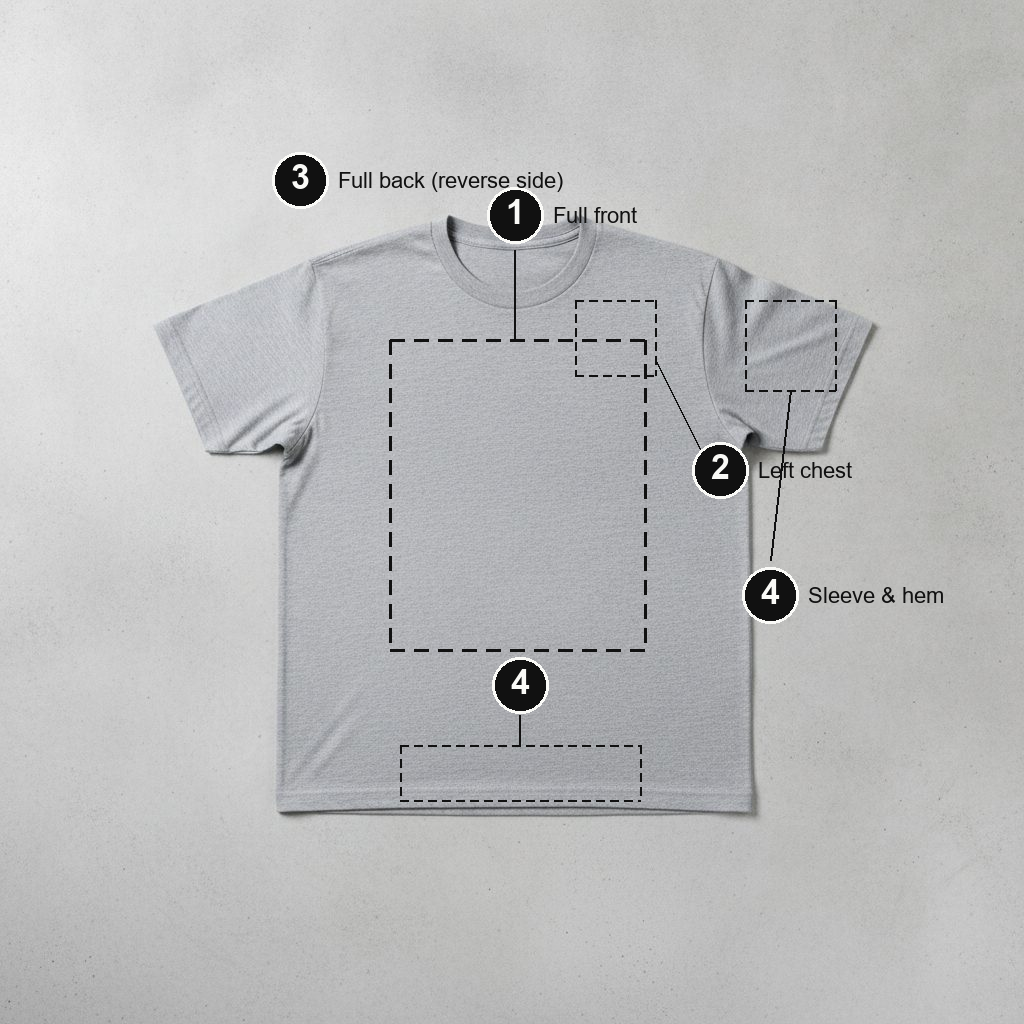
Full front
Highest visibility · up to 15×18 in
The default for graphics and tour art. Drop the print 2–3 inches below the collar so it does not ride up over the chest.
Left chest
High visibility · 3×3 to 4×4 in
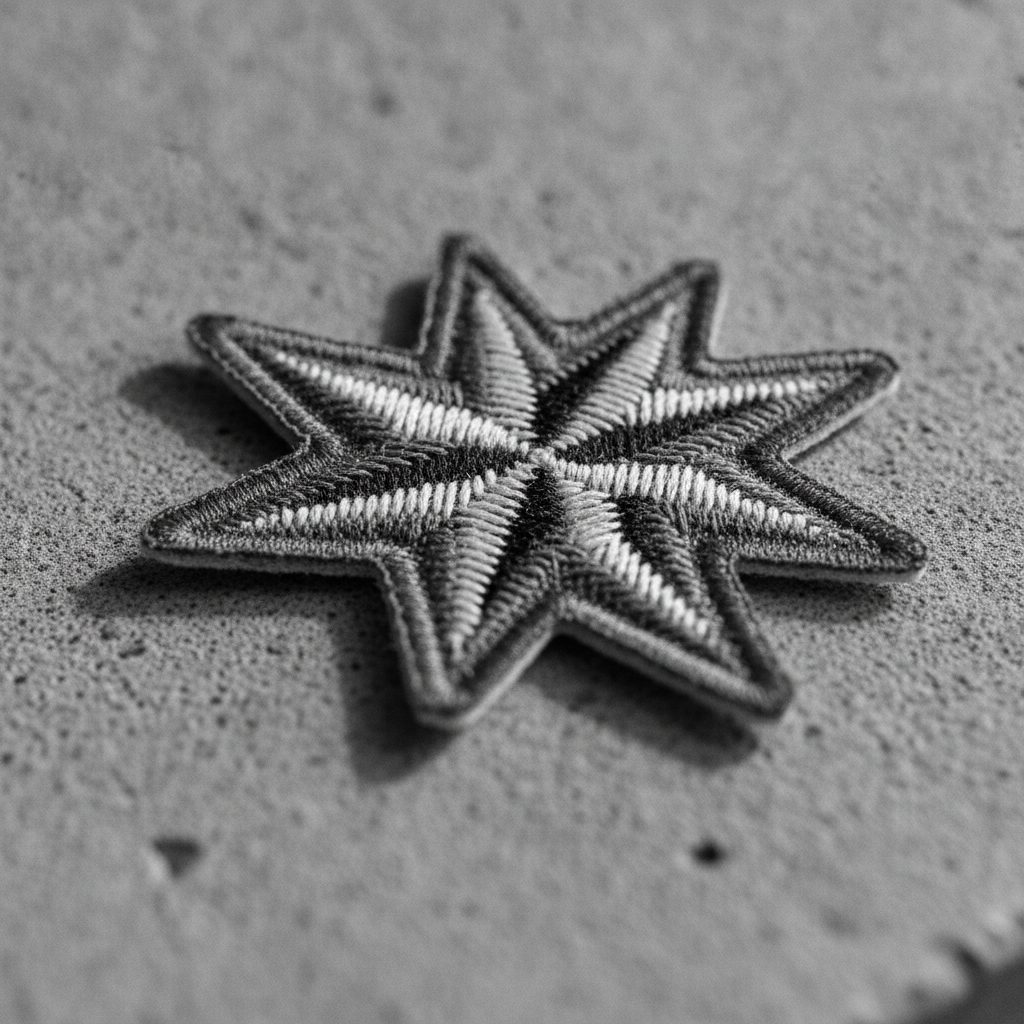
Reads as uniform rather than merch, which is exactly why corporate and hospitality orders live here. Best zone for embroidery.
Full back
High visibility · up to 14×16 in
Where date lists and sponsor blocks go. The only zone with room for small type that still has to be read across a room.
Sleeve & hem
Accent · 2×2 to 3×11 in
A second touchpoint rather than a headline. Watch the seam. Anything crossing it will distort, so we set the art inside the flat panel.
Expert guidance
Send the artwork and we will mark placement and print size on the proof before anything goes to press.
Decoration library
Every way to print a tee
Pick one, or tell us the job and we will pick for you.
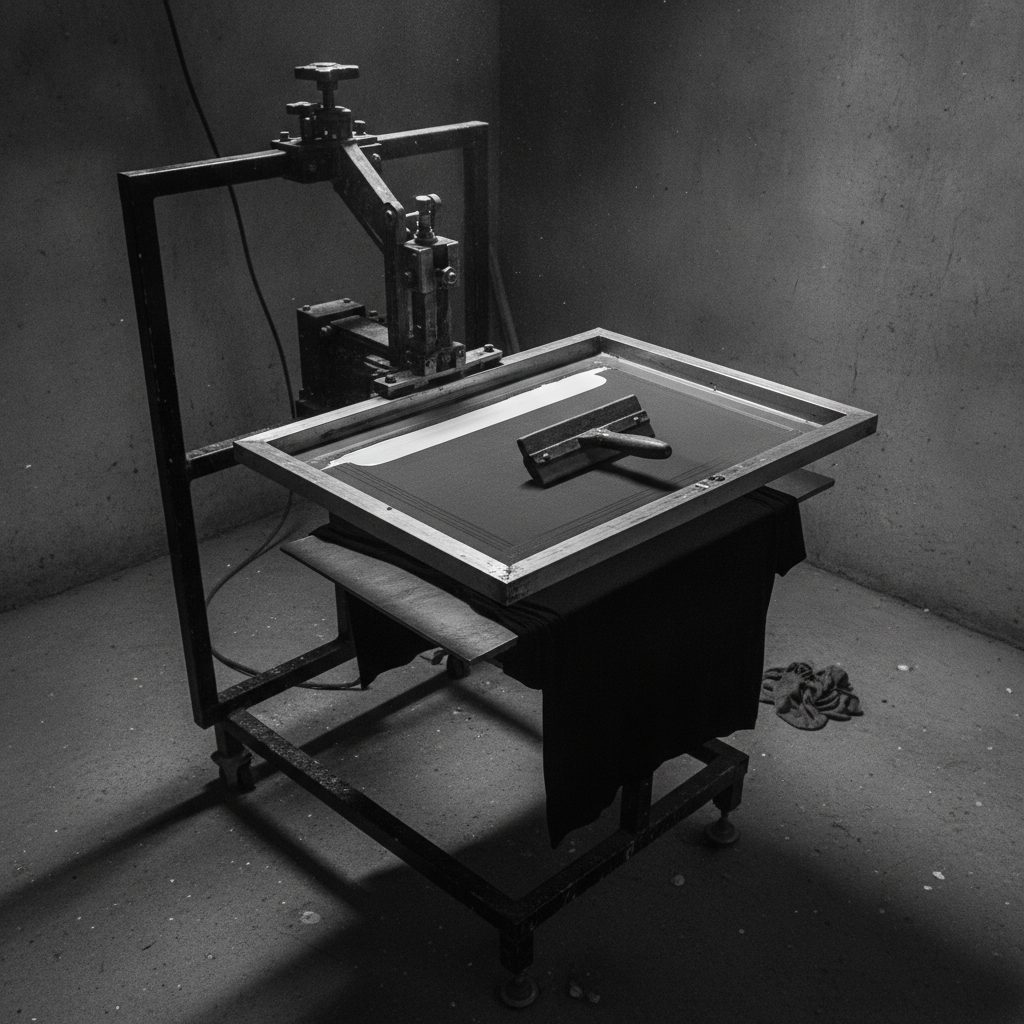
Screen printing
Up to 8 colors, water-based or plastisol, specialty inks on request. The cheapest way to print volume and the only route to puff, metallic and discharge.
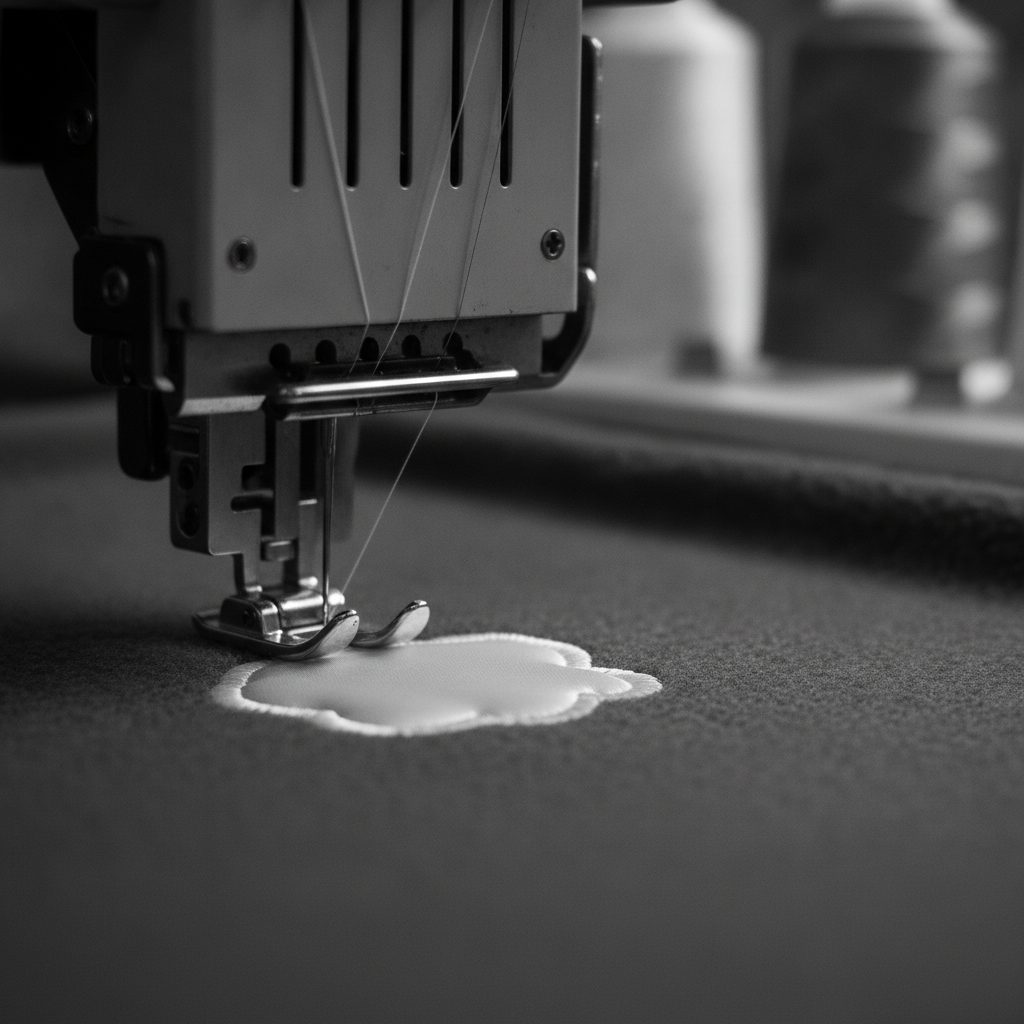
Water-based transfers
Soft-hand, full-color prints from a single piece. Sits into the fabric instead of on top of it.
Use cases
Built for every kind of brand
Brand & retail drops
Limited runs that have to look like the lookbook. Named blanks, custom dye, hangtags and poly-bagging ready for the shelf.
Tour & event merch
Hard dates, size runs boxed by city, and rush when the routing changes.
Corporate & onboarding
Kits people keep. Reorder the same spec next quarter without re-quoting from scratch.
Teams & uniform
Numbers, names and a stock spec we hold, so mid-season replacements match.
Screen printing
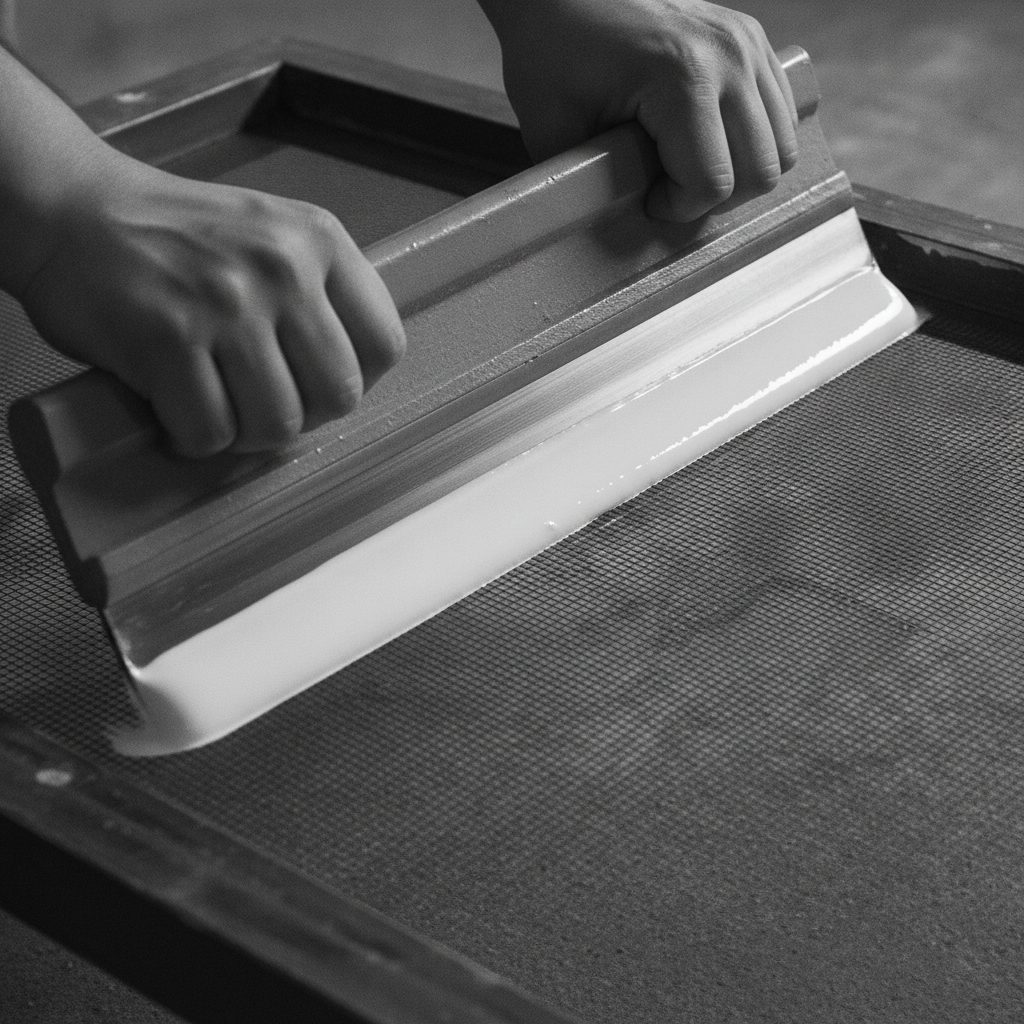
Screen printing, for volume
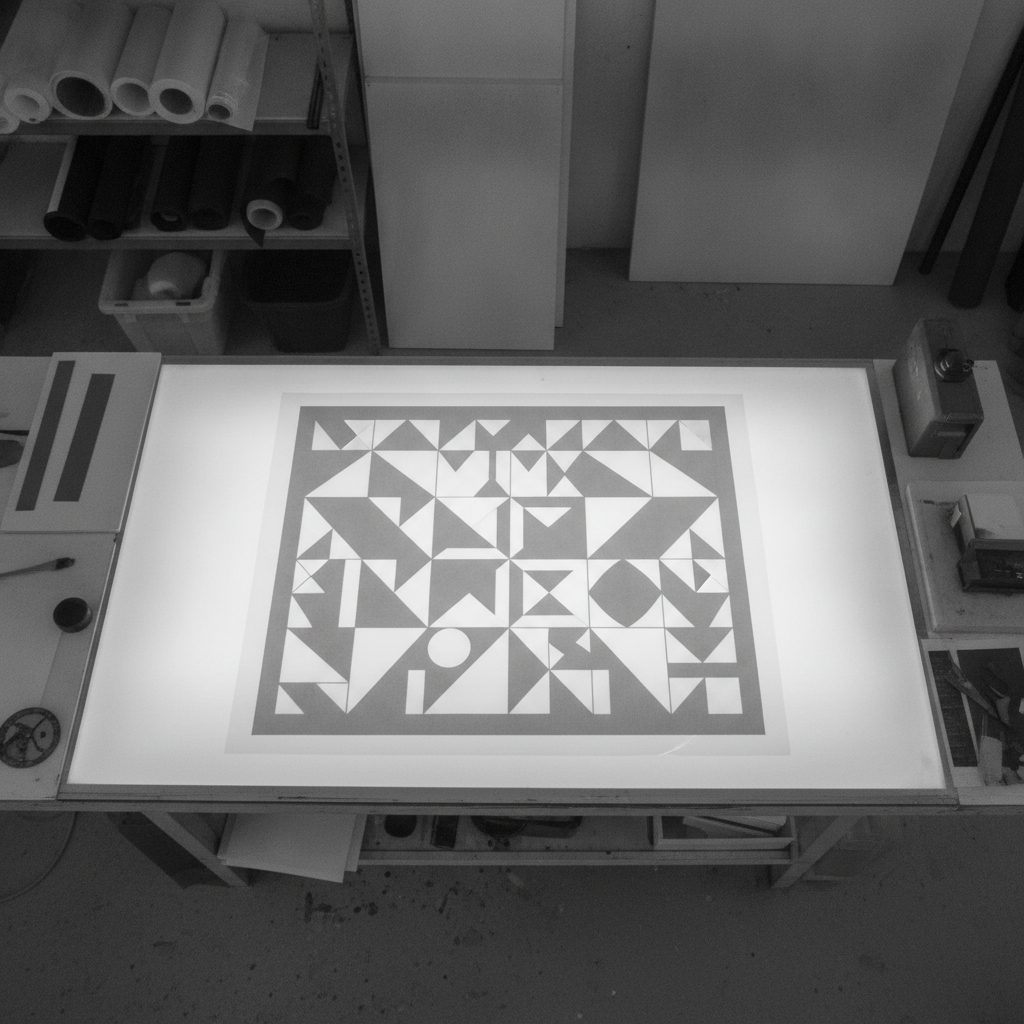
Screen printing starts at 12 of a design. You pay once per color to make the screens, then the cost per piece keeps falling as the run grows. It’s also the only method that opens up specialty inks: puff, metallic, discharge, high-density. Where it falls down: photographic artwork with hundreds of colors, and runs under twelve, where digital is the better buy.
Digital
DTF and DTG, for short runs
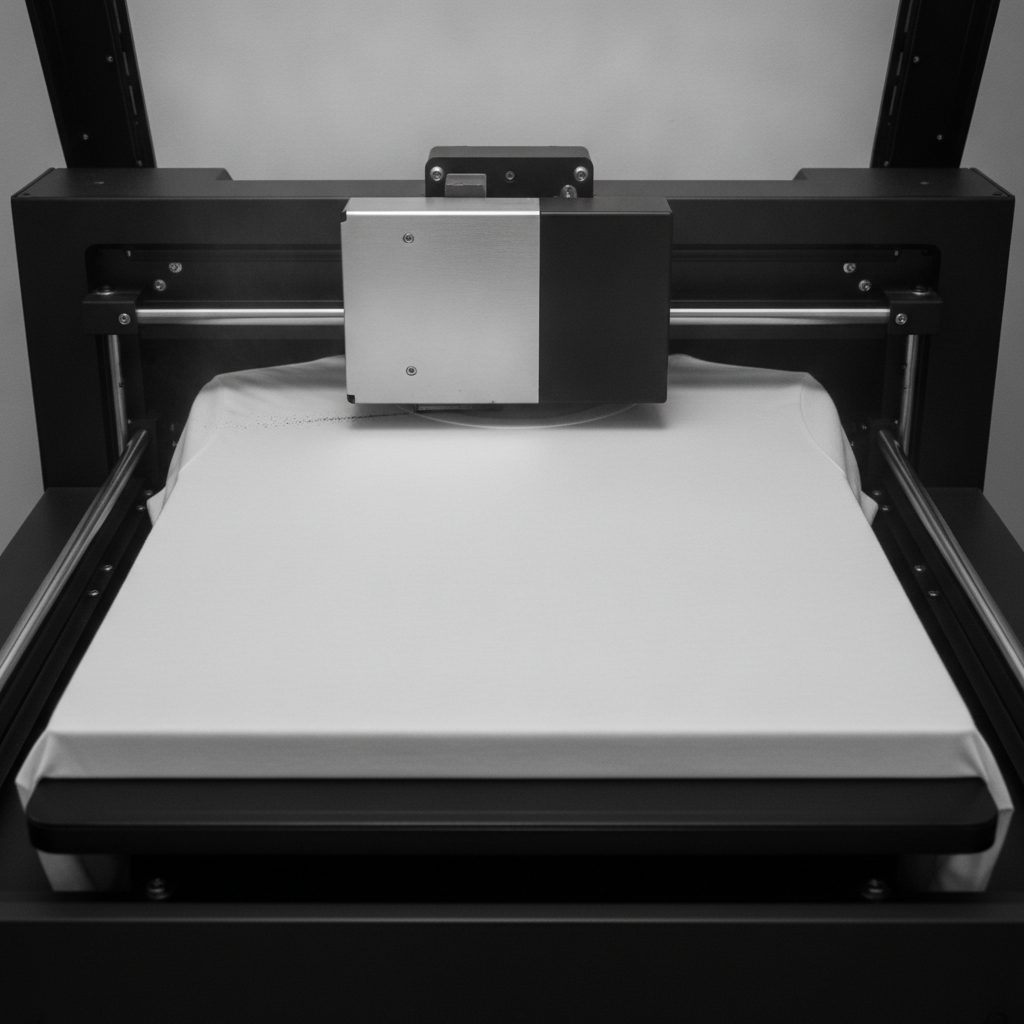
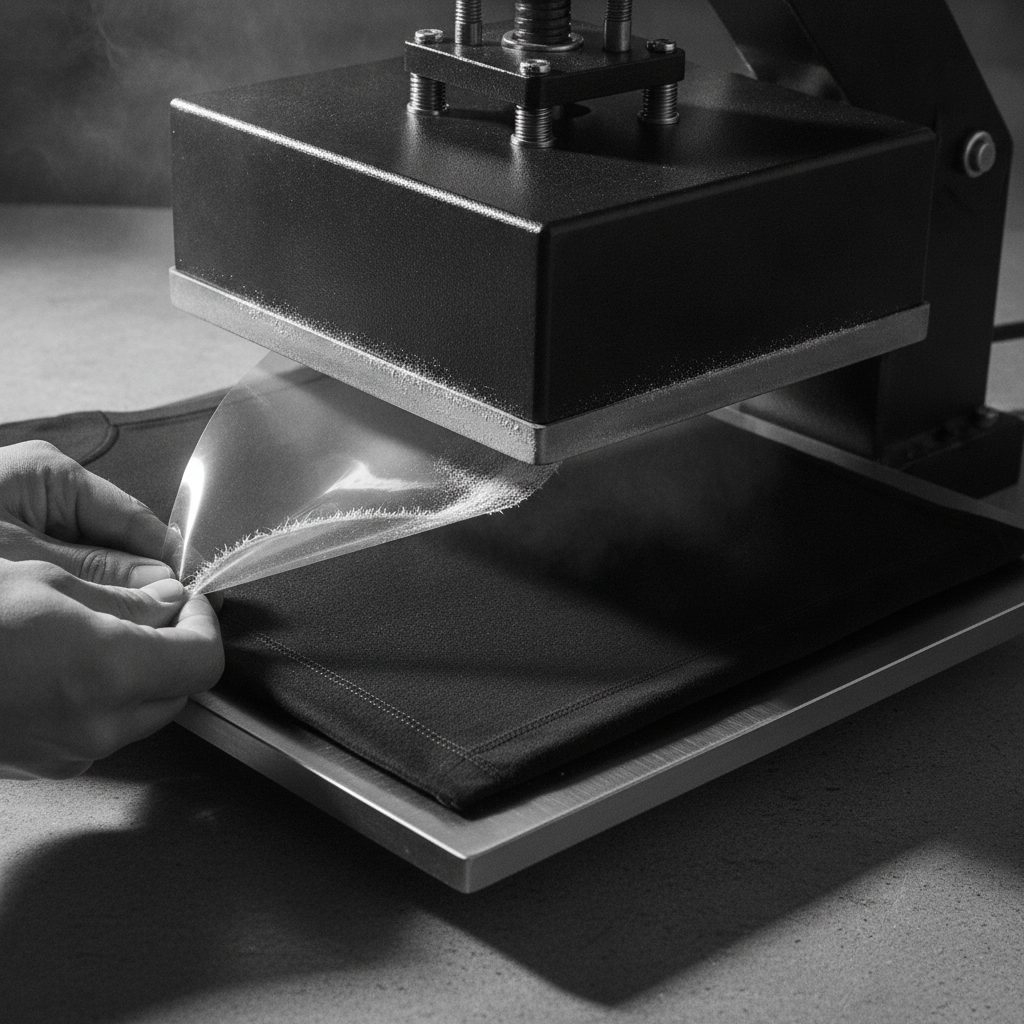
Both are digital. No screens to burn, so there’s no color count to design around and no minimum. One shirt is a real order. DTF presses onto almost any fabric, polyester and nylon included. DTG prints straight into cotton for a softer hand. Send the artwork and we’ll tell you which one your garment wants.
Quantities
One piece, real proofs
One shirt is a real order on DTF and DTG, and screen printing starts at 12 of a design. Standard production runs 2 to 3 weeks, including shipping, counted from proof approval. Whatever the size of the run, nothing hits a garment until you approve a real proof: placement, scale and color, before anything prints.
Before you write
What we need from you
A quote takes minutes if you send four things up front: the artwork, vector where possible or 300 DPI at final print size on a transparent background; the garment, a style number if you have one or just the fit and weight you are after; a quantity and size breakdown, an estimate is fine; and your in-hands date, the day you need it in the room, not the day it ships.
Common questions
What’s the minimum?
There’s no minimum on DTF or DTG. A single piece is fine. Screen printing starts at 12 of a design, where the setup and ink pay off.
Which print method should I pick?
Bold art and bigger runs go to screen printing. Photographic detail on cotton goes to DTG. Full color on any fabric or mixed garments goes to DTF. Want a soft hand from one piece? Water-based transfers. Send us the art and we’ll pick for you.
Can you match my exact color?
On screen printing we mix to a Pantone match, so a brand color comes out the same every run. On full-color methods like DTF and DTG we get you as close as the process allows. Your proof shows exactly where it lands before we print.
Do you print hoodies and other garments too?
Yes. The same methods run on hoodies, long sleeves, activewear, and kids’ sizes. Browse the full range at the collections. If it’s a blank we carry, we can decorate it.
How do I start?
Pick a blank at the collections, then with your art and quantity. We’ll confirm the method, send a proof, and go to print once you approve it.
Your cart is a ghost town.
Stay haunted · ThreadGhost